

Where Heritage Meets Craft
We are at Urus Restaurant & Lounge, in one of Milan’s neighborhoods where the aromas of African cuisine fill the air and people come looking for a place that feels like home. Soft music fills the room. African masks hang on the walls. Two drinks sit on our table. Paul Roger TANONKOU has agreed to share his story. He does so with the same quiet confidence that defines his work: no grand statements, no search for the spotlight. Yet his journey in Italian fashion raises a question that goes far beyond one designer’s story. How did a man who arrived from Cameroon with no intention of building a fashion house become one of the first creatives to bring African heritage and Italian craftsmanship into the same conversation? The answer is ZENAM: a vision born between Africa and Milan, shaped through artisan workshops, local communities and fashion shows, proving that traditions from different worlds can create a new language together.
The Beginning
Before becoming a designer, Paul Roger Tanonkou grew up surrounded by creativity. His father was a photographer, his mother a seamstress. Theatre, music and, later, a degree in computer science all became part of his journey.”I’ve always loved fashion and had a strong sense of style. I owe that to my parents and the creative environment they gave me. In Cameroon, however, fashion was considered a woman’s world. I never imagined that one day this passion would become my profession here in Italy.”
More than twenty years ago, Paul Roger left Cameroon, first for Paris and later for Milan. He had no plans to build a fashion house. Yet, while observing Italy’s fashion capital, one question kept coming back. What was missing in Milan? “The quality of Italian craftsmanship was extraordinary, but I missed the stylistic diversity I had experienced in Paris, especially in Le Marais. People talked about globalization, yet I couldn’t see a genuine meeting of different cultures within Italian fashion.” What others saw as a gap Paul Roger saw as an opportunity.
During his holidays, he returned to Cameroon carrying catalogues from Max Mara and Alberta Ferretti—not to copy them, but to explore how Italian elegance could meet the colors, fabrics and craftsmanship of his own country. That journey produced his first collection, where African tradition and contemporary design found a common language. Back in Milan, the response was immediate. It revealed an unexplored space within Italian fashion: presenting Africa not as an exotic influence, but as an equal creative partner to Made in Italy.
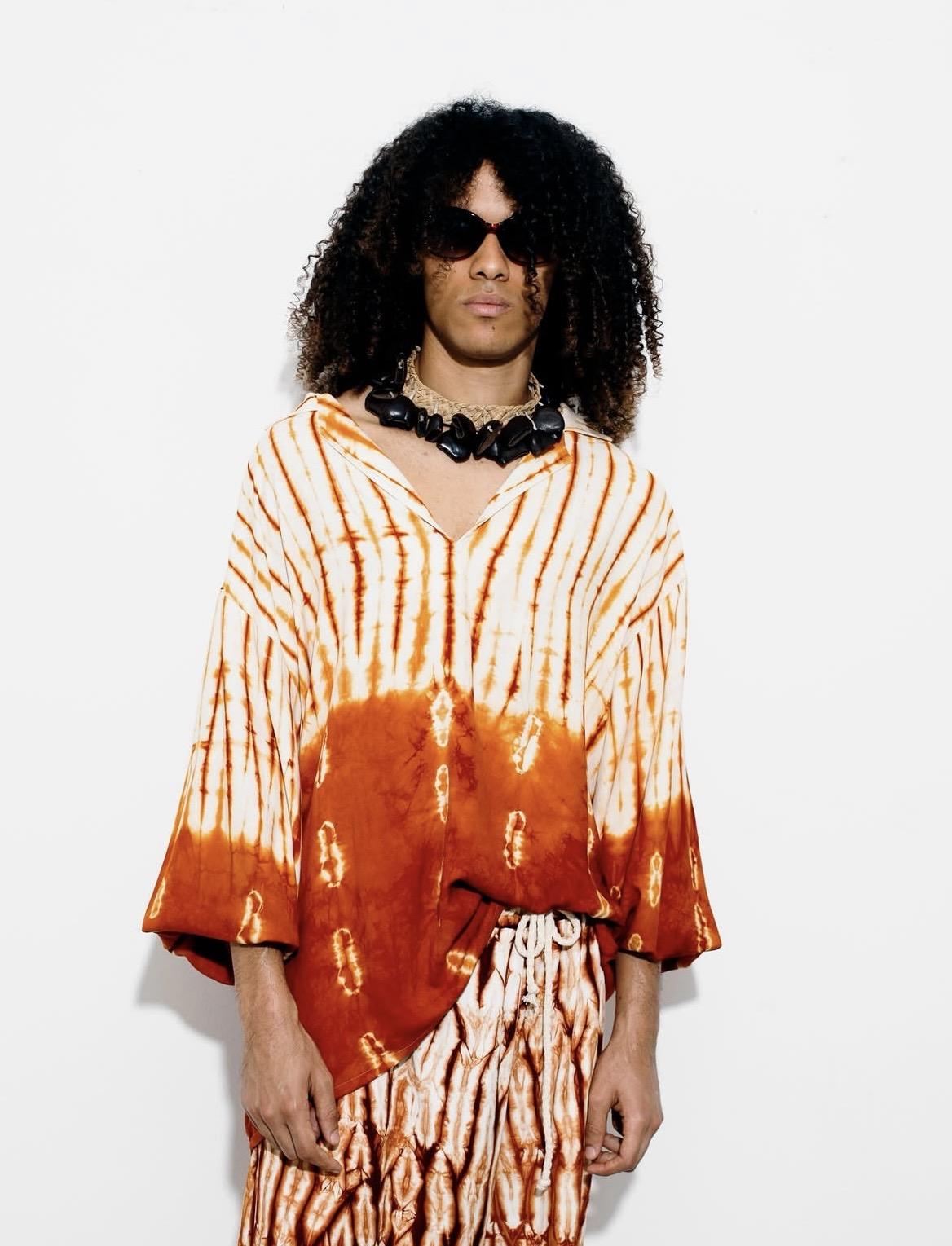
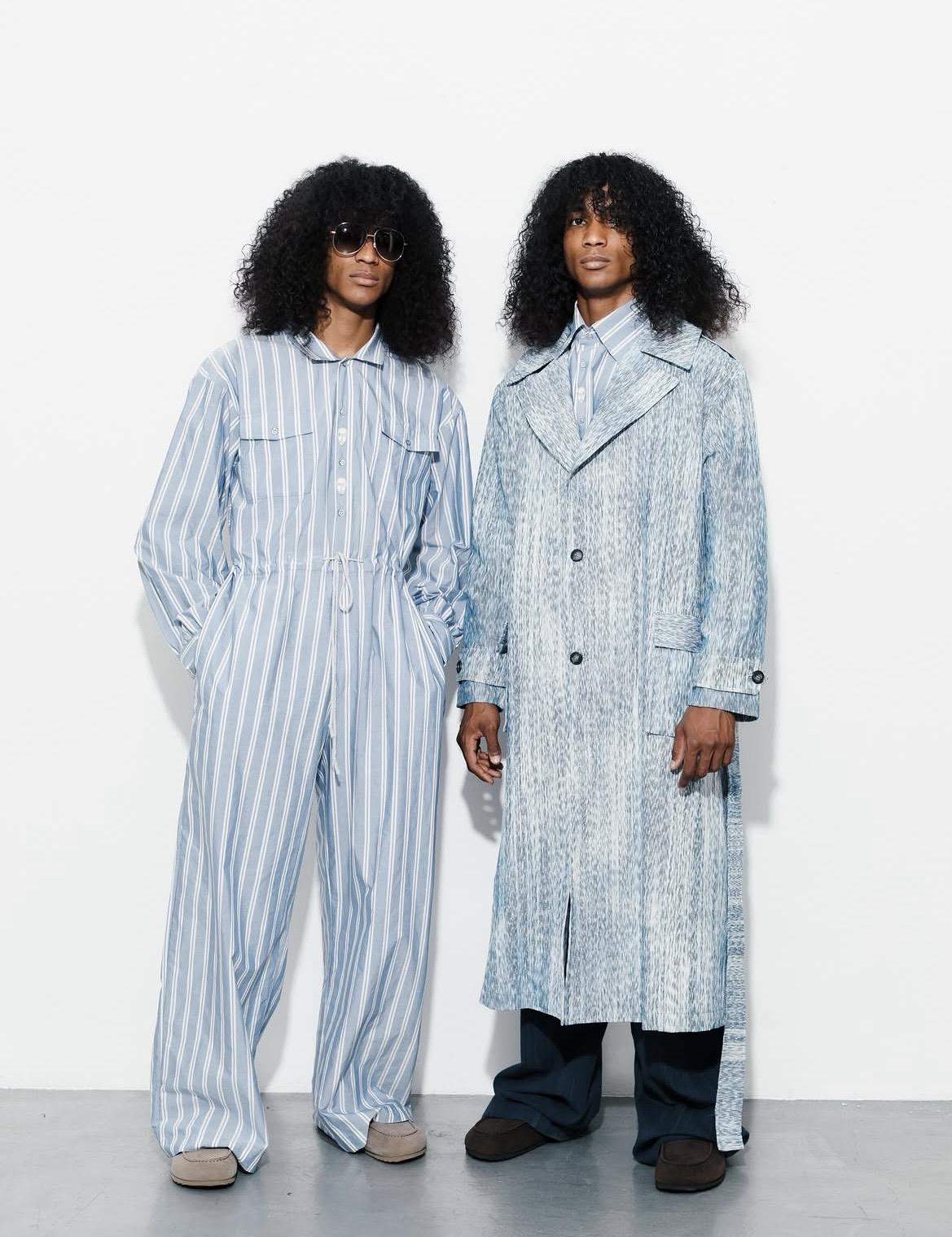
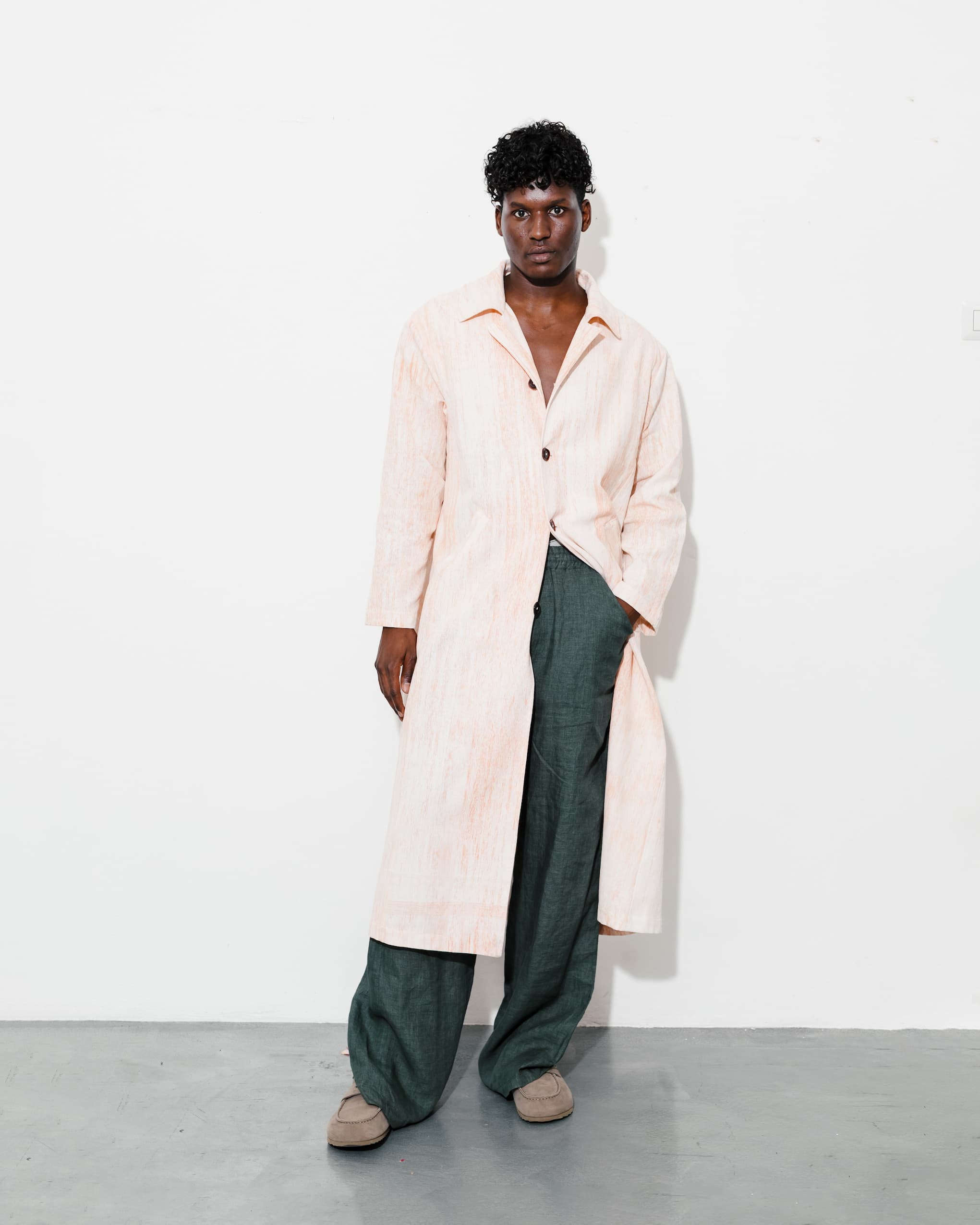
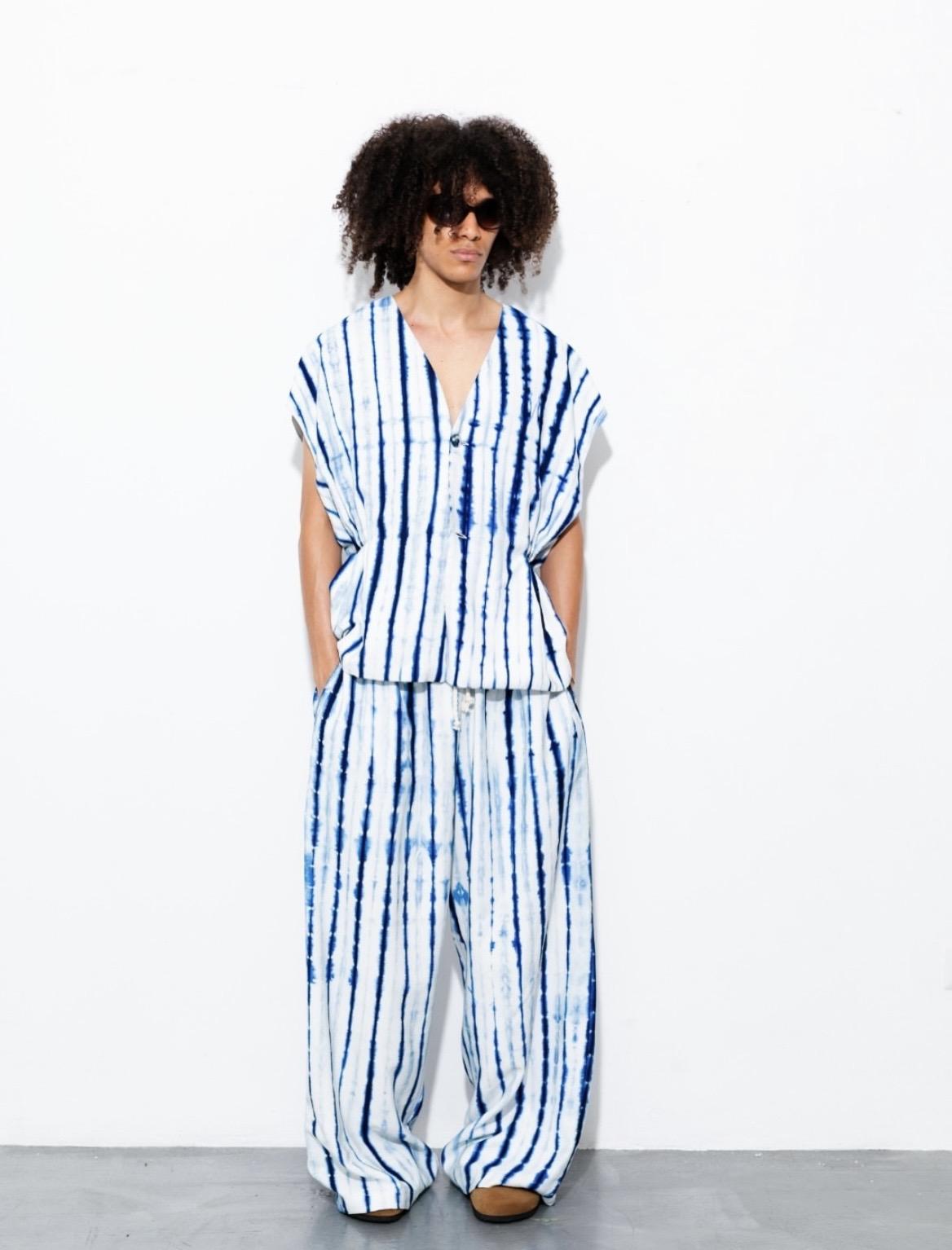
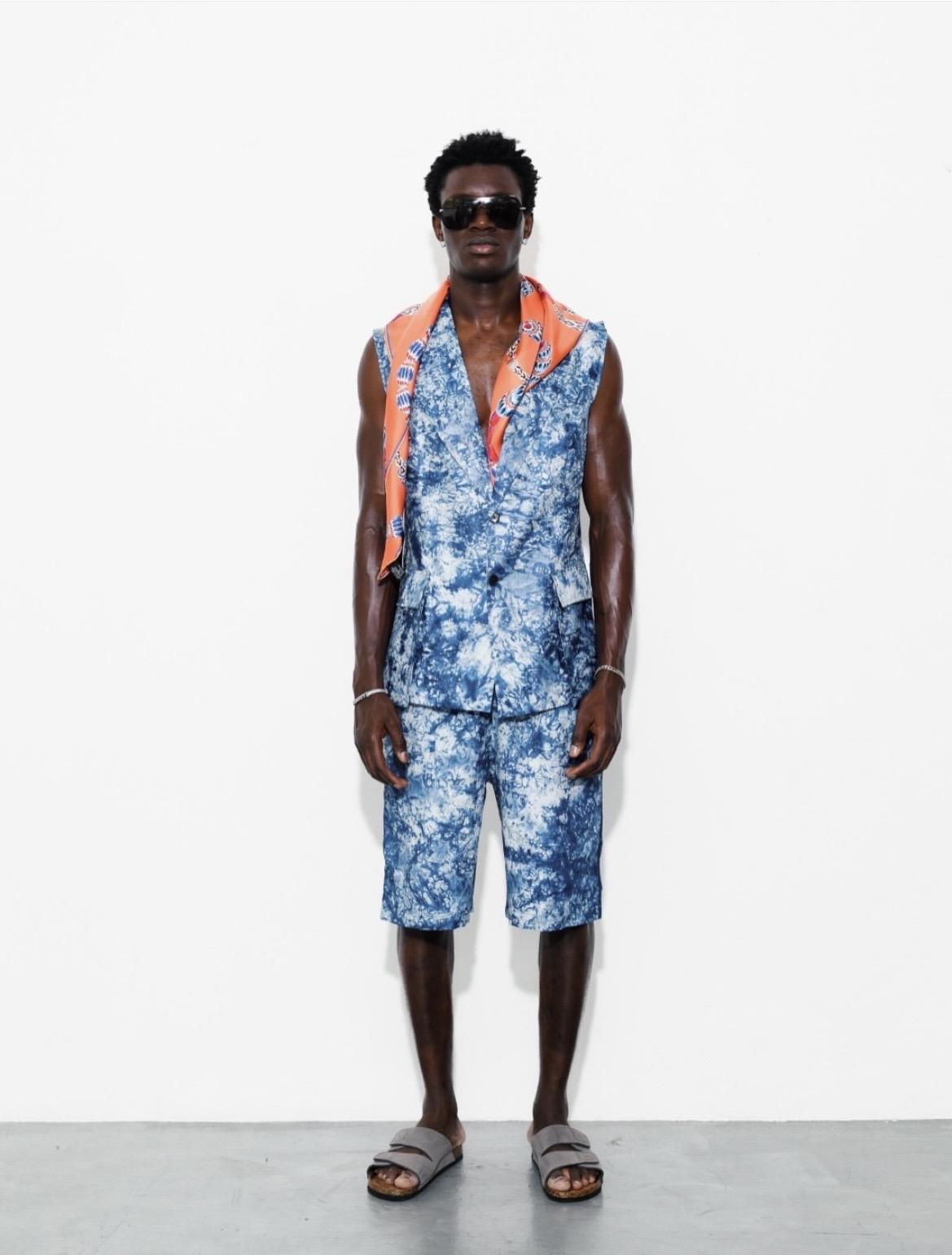
That intuition became the foundation of ZENAM. Every journey added a new chapter. In Mali, among the Dogon community, Paul Roger rediscovered the ancient indigo dyeing tradition. Those fabrics, dyed with pigment extracted from the leaves of Indigofera tinctoria, were later transformed into garments by African students at IUAD – Accademia della Moda di Napoli, creating a dialogue between African craftsmanship and Italian fashion education. Season after season, Tanonkou’s work gained increasing recognition—not only for its colors and prints, but for a vision of fashion capable of connecting different creative traditions while remaining rooted in Italian craftsmanship.
The Turning Point
Paul Roger slowly turns his glass of bissap in his hands. He lowers his eyes before looking up with a smile. “I didn’t really understand what was happening. Everyone called me a fashion designer, but I didn’t see myself that way.” At Urus, time seems to stand still as he recalls what happened in 2007, when Frank Gallucci, a well-known figure in the Italian fashion scene, wore one of his creations during Pitti Uomo. “I never imagined they would receive that kind of attention.”
The photographs quickly spread through the fashion world. Soon after, an unexpected phone call changed everything. “Faenza Stile contacted me because they were looking for emerging designers and invited me to present a project. I didn’t even know what they wanted or what I was supposed to bring.” Still, he went. “The waiting room was full of young designers from prestigious fashion schools. They all carried portfolios. I had nothing with me. When they asked me to talk about my work, I simply replied, ‘You were the ones who called me.'” He laughs. Until then, Paul Roger had simply followed an intuition. From that day on, that intuition became Zenam.
ZENAM: “When a Vision Finds Its Name”
A new chapter begins. Tanonkou’s intuition had finally found someone willing to believe in it. Faenza Stile helped him shape a project that had existed only in his imagination, entrusting him with the creative direction, design and development of the brand. “With Faenza Stile I created my first prints, the logo, the colors and the philosophy behind the brand.” The emotion in his voice is unmistakable.
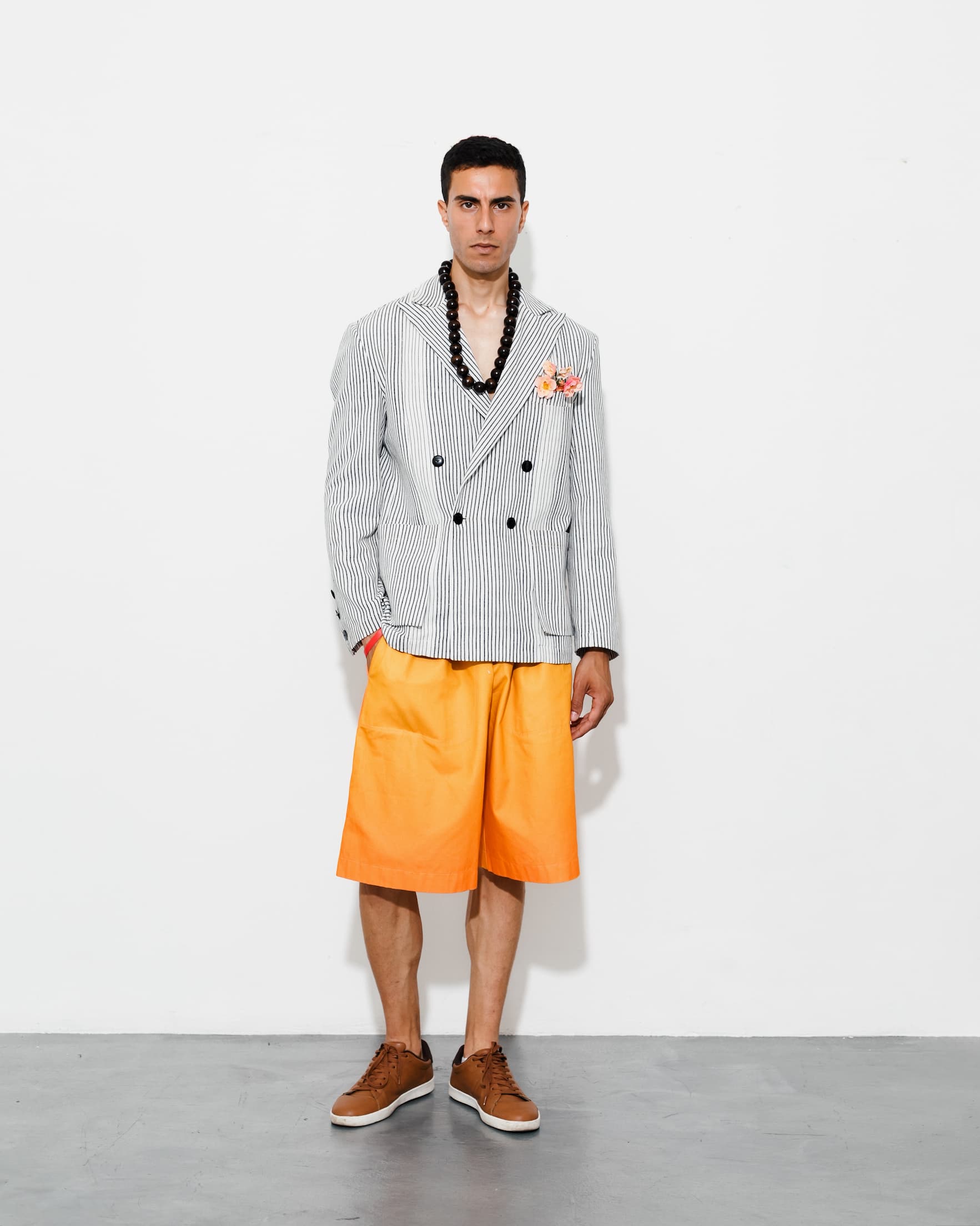
The name ZENAM already tells the story. In the Bamiléké language it means Ray of Sunshine. Like sunlight, Tanonkou’s vision does not impose itself; it spreads naturally, connecting cultures, people and places. Fashion becomes a language that brings together African craftsmanship and Italian manufacturing expertise. Paul Roger then pauses to talk about the logo. “In the West, a mask often hides who you are. In Africa, it does the opposite. It reveals your true self. It isn’t something to hide behind; it is a symbol of who you really are.” Zenam is quiet. Elegant. Never loud. More than a fashion brand, it is an international and intercultural vision that has also attracted fashion commentator Louis Pisano, who has worn Tanonkou’s creations.
From Loss to Legacy
The conversation slows. The bissap is still almost untouched. “With ZENAM, my collection was presented at Pitti Uomo in 2016.” He smiles. “From nothing to Pitti Uomo… It was an incredible place.” But the memory that stays with him is not the runway. “The greatest emotion for any creative person comes during the journey. During the preparation. Seeing my first prints come to life and the finished garments… Pitti Uomo was the reward for all my hard work.” Then his expression changes. “Many times I thought about giving everything up. This world is beautiful, but it can also be ver difficult.” The hardest moment came even before ZENAM was born. Shortly before meeting Faenza Stile, Paul Roger lost his brother in Canada. “I didn’t want to do anything anymore. My family and friends convinced me to keep going. They told me that everything I was building would have made him proud.” At the time, Paul Roger Tanonkou was one of the very few African creatives working in the Italian fashion industry. Why continue? Who was he doing it for? After two seasons with Faenza Stile, he began collaborating with Gaia Trussardi. “It was a wonderful experience. I have very fond memories of that time.” ZENAM’s collections later appeared in showrooms across Italy, from Via della Spiga to Taormina, Elba Island and Sardegna. Yet the brand found its strongest response abroad.
“Many times I lost hope. Then Afro Fashion Association was founded thanks to Michelle Ngonmo. She had known my work for years and never stopped encouraging me.” From that moment, Afro Fashion Association and an international PR company became important partners in ZENAM’s journey. At the same time, Tanonkou’s story became an inspiration for a new generation of African and Afro- descendant creatives finding their place in Italian fashion.
The Hands Behind the Heritage
When the conversation turns to women, Paul Roger smiles.”I remember my mother’s atelier. I loved helping her and looking for new design ideas together with her. I owe so much to her.” Perhaps that small workshop is where his vision of fashion began. For Paul Roger, ZENAM has never been a personal project. Women have always been at its heart.
“In Africa, women often work harder than men. They contribute more to the family’s income and care, yet their work is rarely recognized.” In many villages, textile craftsmanship is built on patience, shared knowledge and memory. That is why, travelling from Cameroon to Burkina Faso through Mali and Morocco, Paul searches not only for fabrics but also for the women who preserve these traditions. Through their work, Italy receives much more than textiles: it receives stories, knowledge and craftsmanship that become part of every ZENAM collection.
Elegance Without Borders
Who is the man Paul imagines when he designs a collection? His eyes light up. “He is intelligent and curious. He loves travelling and learning about different cultures. He is open-minded.” Then he adds: “Being open-minded doesn’t mean giving up your traditions. My brand brings together African, French and my own personal heritage. The man who wears ZENAM should embrace them all without building barriers.” Perhaps this is why ZENAM has found particular appreciation in France and the United Kingdom. It remains a niche brand, but it speaks to an international man who moves naturally between cultures. Today that journey continues in Venezia at the Excelsior Beach Store, on the waterfront of Hotel Excelsior at the Venice Lido, home to the Venice International Film Festival. There, ZENAM meets an international audience of artists, actors and creatives, in a setting that perfectly reflects the brand’s philosophy of building bridges between cultures through the universal language of elegance.
A Future Woven Across Continents
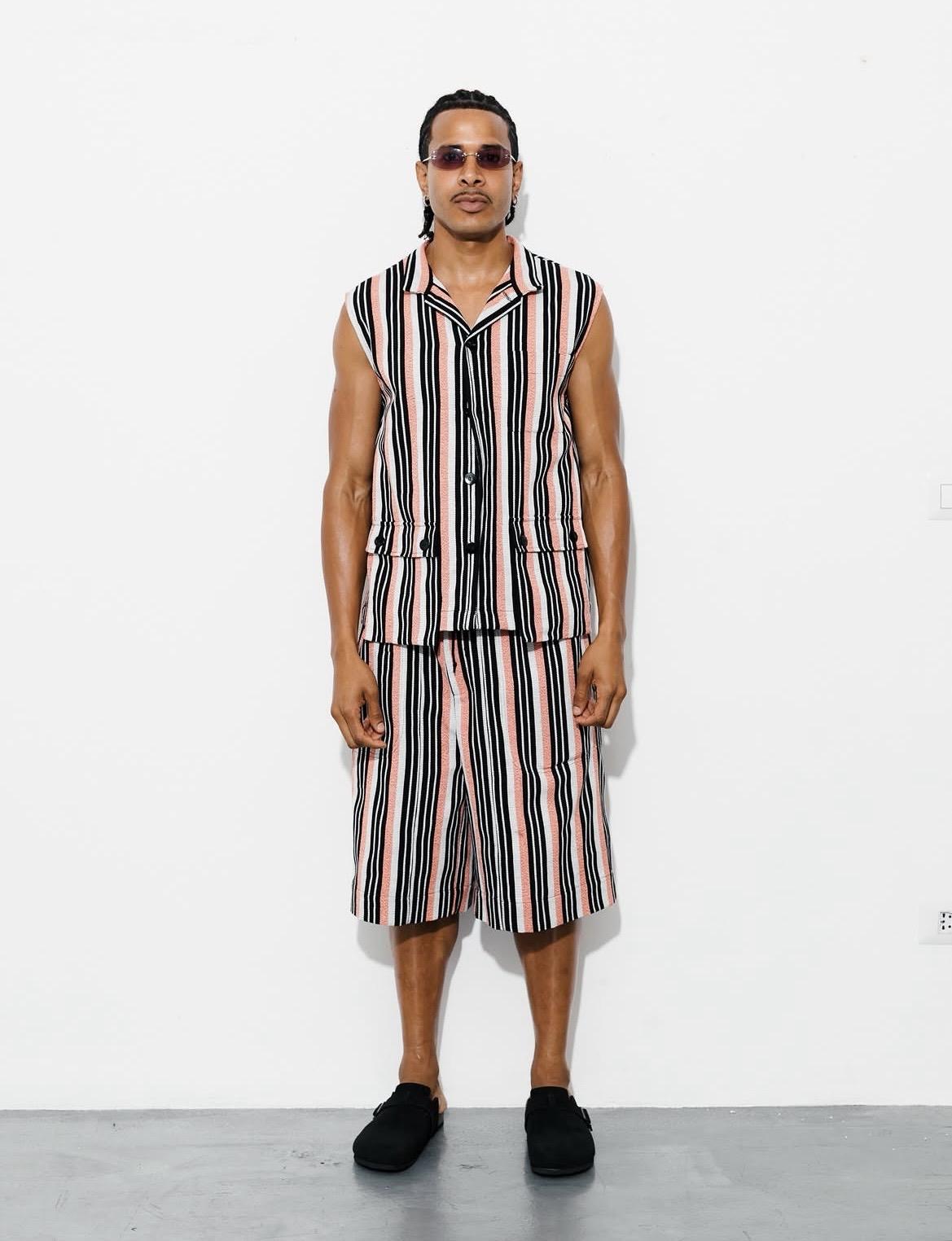
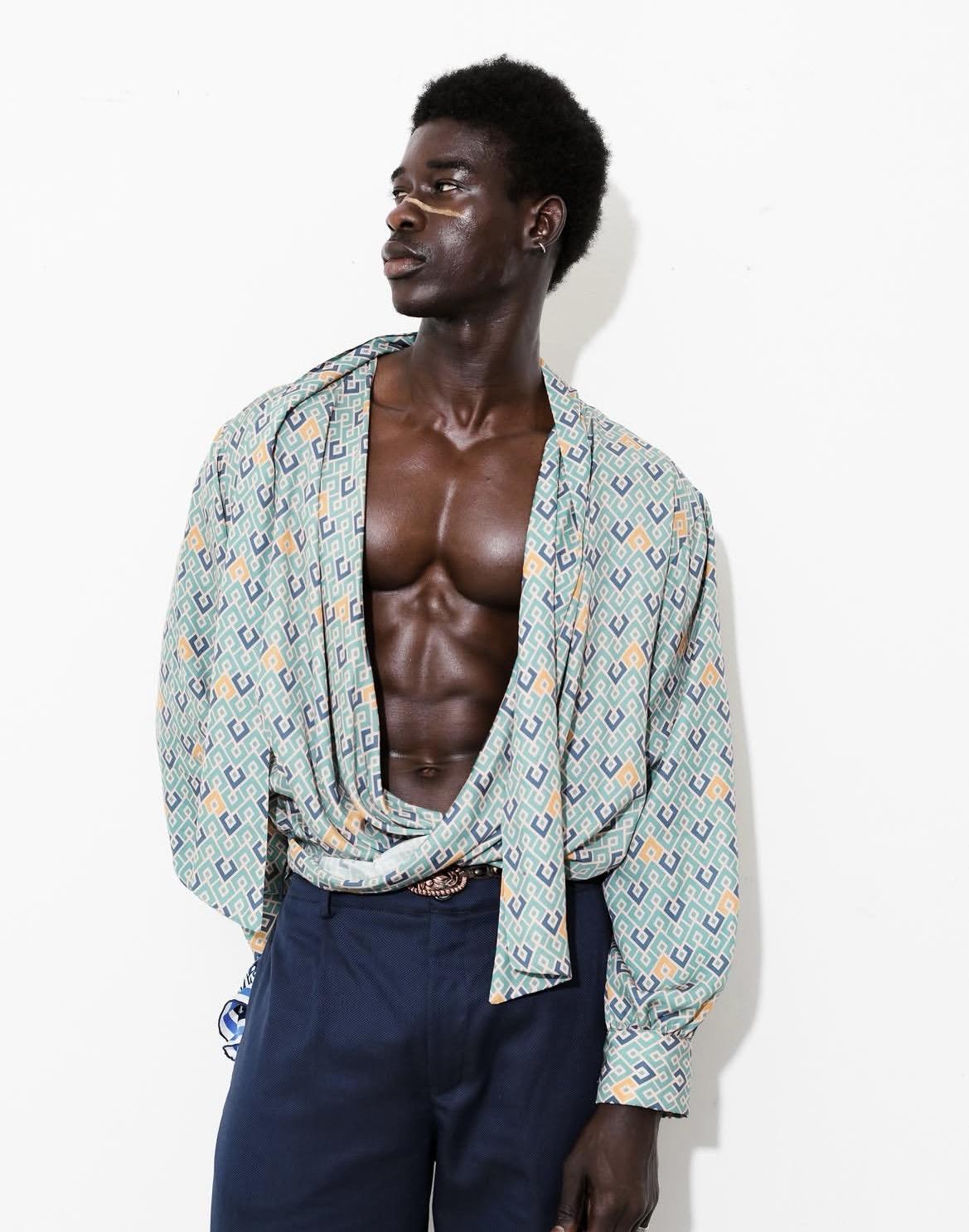
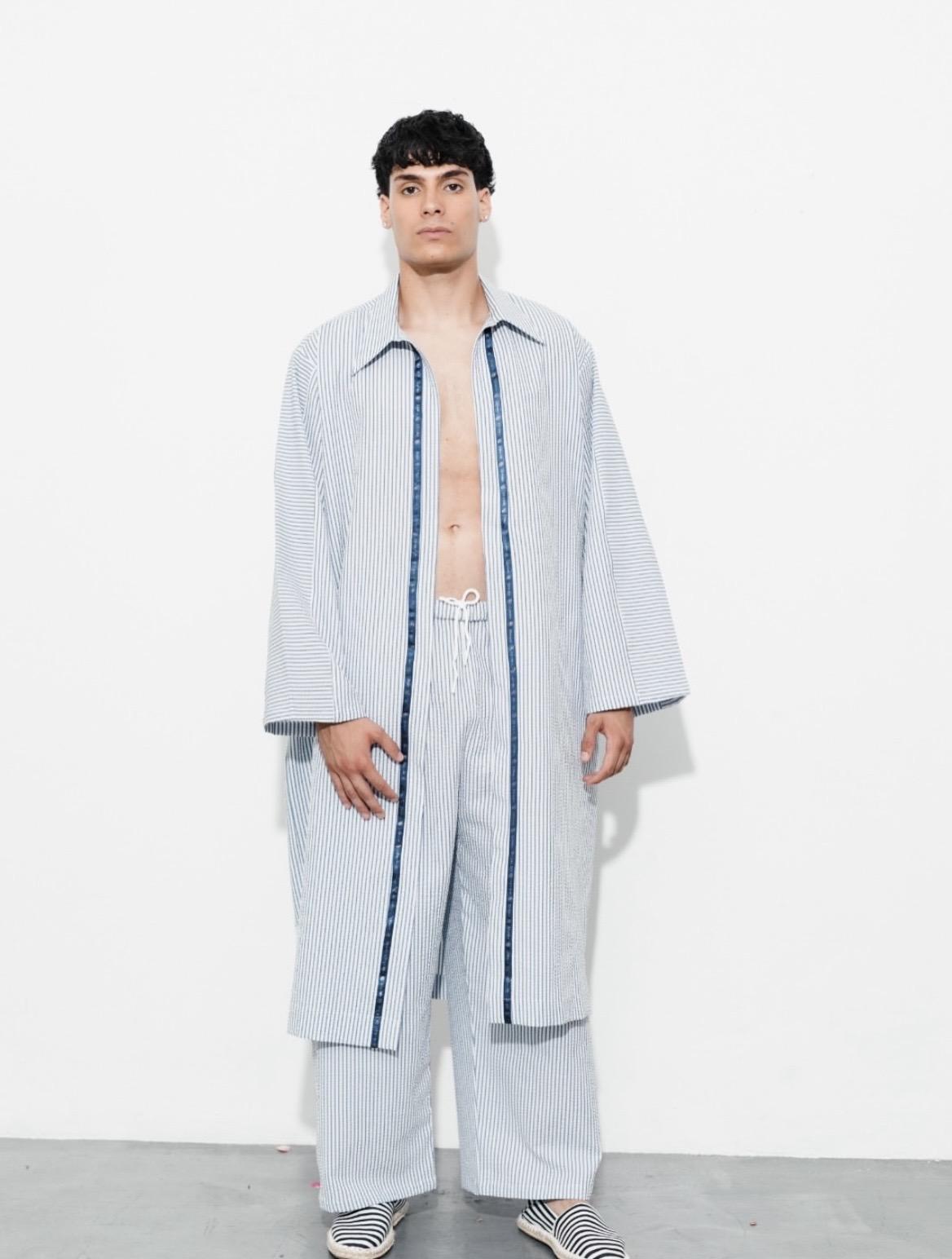
As our conversation comes to an end, one thing is clear: Paul Roger’s journey is far from over. The latest chapter is Une lettre du Burkina Faso, the Spring/Summer 2027 menswear collection presented at Fondazione Sozzani as part of the official calendar of Camera Nazionale della Moda Italiana.
One of its highlights is Les Carrés Sacrés, a capsule of fourteen silk twill scarves illustrated by Tanonkou. Inspired by African iconography, each design reinterprets tradition through a contemporary visual language. “I would love this capsule to become the symbol of Zenam’s message. I’d like to dedicate an event to it, hopefully with international buyers, so people can discover not only the scarves, but also the stories they carry. ZENAM was not born in Milan. It is born again and again. “I don’t know what tomorrow will bring. ZENAM is an ecosystem that keeps evolving together with the fashion world, in Italy and abroad. I was one of the pioneers, and that gives me a responsibility: to keep exploring new markets and new opportunities, not only for myself, but for those who will come after me.” The bissap is gone, leaving only two ice cubes at the bottom of the glass. We step out of Urus and back into the streets of Milan.
Photo Credits: Donald Ngamene, Cristina Toso
CONTRIBUTOR ALINA BALIJJA
Alina Balijja is an Italian-Ugandan Visual Identity & Image Strategist, author, and fashion contributor based in Milan. She is the author of Elegance and Dress Code for Dark-Skinned Women, a book that explores personal style as a language of confidence, identity, and cultural expression. Through her work, she examines the intersection of fashion, heritage, and representation, with a particular focus on the dialogue between African creativity and Italian craftsmanship. As the founder of Black Charmy Lady, she explores personal image as a language of non-verbal communication, helping individuals express identity, credibility, and self-affirmation before a single word is spoken.
Read more on Fashion Africa Now.